Tuesday, March 16, 2010

My Family Background

My parents have their own business whereas they were satay seller in 'Pasar Malam' in our hometown.Costumers love of my parent's satay because it so cheap and delicious.

Every Friday,before i'm here,I always help my parents sell of the satay in Jengka 18,and every Monday I will help my parents in Jengka 19.Actually I like the satay that my mother made because it so delicious.


My experience

After Stpm,I have try to looking for work experience.So,I try to work in a cake shop at Bandar Pusat Jengka,near with my hometown.Although I'm not work at there in long time,but I'm still get a new experience how to bake


This is my brother.His name is Muhammad Umar bin Hambar.He is 19 years old,and now he has work at kitchen store in Temerloh.
This is my sister.Her name is Nor Habibah binti Hambar.She is 15 years old,and now she studies in Madrasah Al-Uloom,Sg.Salan,Jerantut,Pahang Darul Makmur.


This is my younger sister.Her name is Harithah binti Hambar.She is 9 years old,and she studies in Sekolah Kebangsaan Jengka 23,Bandar Jengka,Pahang Darul Makmur.

About My Self


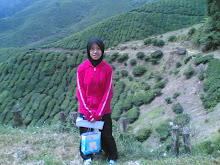
My name is Aishah binti Hambar.I have parents and siblings.My father's name is Hambar bin Mohd Taib and my mother's name is Salmiah binti Ishak.I have 2 brothers and 2 sisters.I am the elder on my siblings.My brothers are 19 and 18 years old each other.Their name are Muhd Umar and Muhd Awis,whereas my sisters are 15 and 9 years old each other.Their names are Nor Habibah and Harithah.I love my family because they always support me whatever of my situation.


Sunday, March 14, 2010


ECONOMICS

Economics is the social science that studies the production, distribution, and consumption of goods and services.
Economics Quotes
1.It's not your salary that make you rich,it's your spending habits.
2.An economist is an expert who will know tomorrow why the things he predicted yesterday didn't happen today.
3.The meaning of economic freedom is that the individual is in a position. to choose the way in which he wants to integrate himself into the totality of society.
4.The world does not pay for what a person knows,but it pays for what a person does with what he knows.


MARKETING

Marketing is my course in this UiTM City Campus.For me,marketing is an interesting course because it teach me how to manage about business with right way.Marketing is the process by which companies determine what products or services may be of interest to customers, and the strategy to use in sales, communications and business development.It is an integrated process through which companies create value for customers and build strong customer relationships in order to capture value from customers in return.Marketing is the wide range of activities involved in making sure that you're continuing to meet the needs of your customers and getting value in return. Marketing is usually focused on one product or service. Thus, a marketing plan for one product might be very different than that for another product. Marketing activities include "inbound marketing," such as market research to find out, for example, what groups of potential customers exist, what their needs are, which of those needs you can meet, how you should meet them, etc. Inbound marketing also includes analyzing the competition, positioning your new product or service (finding your market niche), and pricing your products and services. "Outbound marketing" includes promoting a product through continued advertising, promotions, public relations and sales.

I like to studies in marketing course because it so interesting.I hope,I can studies in this course with details part so that i can application it when I have been work after graduation.

Introduction of information systems


Description


Databases are at the heart of modern commercial application development. Their use extends beyond this to many applications and environments where large amounts of data must be stored for efficient update and retrieval. The purpose of this course is to provide an introduction to the design and use of database systems, as well as an appreciation of the key issues in building such systems in heterogeneous and Web environments.
We begin by covering the relational model and the SQL language. We then study methods for database design, covering the entity relationship model. Next, we discuss XML as a data model, and present languages for querying it. We see how XML is used for sharing data among different applications in a distributed environment. Finally, we touch on some advanced topics on the implementation of database systems, such as transactions and indexing.


This introduction to information systems is relevant with my studies.

Friday, March 12, 2010

What is Malaysian Chinese Food


Chinese merchants and traders have long ago been linked to the Malayan Peninsula in the South China Sea. The natural port of Malacca was a strategic trading post and a vital link to other traders from far across the globe. In order to establish trade and diplomatic ties, the ruling Chinese Emperor ordered a royal entourage to escort Princess Hang Li Po to marry the Sultan of Malacca. This historic juncture marked the first Chinese settlers in the port town of Malacca on the Malayan Peninsula. Many of these early settlers intermarried and integrated with local Malays, forming a unique community called Peranakan.


It was, however, later in history during the 1800s, that the Chinese came in masses to the Malayan Peninsula. It was during the era of the last European colonists, the British, that a large influx of Chinese journeyed to the Malayan Peninsula for employment. Tin had long since been discovered in the jungles of the Malayan Peninsula. It was only now under the British, that large scale tin mining was viable and operational. The booming tin mining industry attracted the much needed workforce of Chinese who came in large numbers, mostly from the Southern provinces of China. These early Chinese migrants were guest workers who came with the intention of one day returning to their homeland and families. Although the majority of Chinese were employed in the tin mining industry, some were small business merchants and artisans. Various small businesses, those supporting the tin mining industry and those in general soon contributed to the initial economic growth of the country. When Malaysia gained independence from the British in 1957, many Chinese returned to their homeland in China; and many more chose to stay, making up 26% of today's population of 22 million in Malaysia.

google_protectAndRun("ads_core.google_render_ad", google_handleError, google_render_ad);

What is Malaysian Indian Food?


The Malayan Peninsula with it's small kingdoms and chiefdoms had a long history of trade with merchants from India. These traders have come and gone over the centuries bringing with them Hindu influences, seen in the customs and rituals of local rulers. However it was not until the 19th century, after the Portuguese and Dutch colonists were eclipsed by the British, who took control of the Malayan Peninsula that mass Indian migration took place. Rubber seedlings from Brazil were found to grow successfully in this equatorial land, and much needed manpower were recruited from British East India for the burgeoning rubber industry. Road, waterworks as well as railway infrastructure were also breaking new ground in this equatorial jungle nation. 80% of Indians were Tamils from South India employed in the rubber industry, while Sri Lankan Tamils and Malayalees were employed in supervisory and clerical positions. Of the North Indians, the Punjabis were employed in the police force while the Gujaratis and Sindhis were in business, mainly textiles. Despite the mass exodus of Indians returning to India after Malaysia's independence from the British in 1957, many stayed on and today Indians constitute the third largest ethnic group, making up 8% of Malaysia's population of 27 million.

google_protectAndRun("ads_core.google_render_ad", google_handleError, google_render_ad);

Wednesday, March 10, 2010

What is Malay Food


The Malays are the people who inhabit the Malayan Peninsula and some of the nearby islands, including the east coast of Sumatra, the coast of Borneo and smaller islands that lie between the area. These tribal proto-Malays were a seafaring people. Present day Malays of the Peninsula and coasts of the Malay Archipelago are "anthropologically described as deutero-Malays" and are the descendants of the tribal proto-Malays mixed with modern Indian, Thai, Arab and Chinese ancestry. Malay culture itself has been strongly influenced by that of people of neighboring lands, including Siamese, Javanese, Sumatran and Indians. The influence of Hindu India was historically very great, and the Malay people were largely Hinduized before they were converted to Islam in the 15th century. For 2000 years, the traffic of traders between the Malayan Archipelago and India resulted in frequent intermarriages especially Tamils and Gujeratis. Some Hindu rituals survive in Malay culture, as in the second part of the marriage ceremony and in various ceremonies of State. Malays have also preserved some of their more ancient beliefs in spirits of the soil and jungle, often having recourse to medicine men called bomohs [shamans] for the treatment of ailments.


In the northern states of Perlis and Kedah, intermarriages with Thais were commonplace. The east coast state of Kelantan still has traces of Javanese culture that date back to the era of the Majapahit Empire of the 14th century. The Sumatran kingdom of Acheh dominated Perak for over a century. The Bugis from Indonesia's Celebes Islands colonized Selangor and fought for rulers in States along the length of the peninsula - from Kedah to Johor. The Minangkabaus from Sumatra had their own independent chiefdoms in what is today the state of Negri Sembilan. This mix of different ethnic groups form what is the modern Malay and can be clearly seen in the lineage of, for example, Malacca's royalty. Sultan Muhammad Shah married a Tamil from South India. Sultan Mansur Shah married a Javanese, a Chinese and a Siamese; the Siamese wife bore two future Sultans of Pahang. It was this diversity of races, cultures and influences that has the given the modern Malay race the rich and unique historical heritage it has today.


This rich historical heritage has evidently resulted in it's exotic cuisine. In Malay cuisine fresh aromatic herbs and roots are used, some familiar, such as lemongrass, ginger, garlic, shallots, kaffir limes and fresh chilies. Both fresh and dried chilies are used, usually ground into a sambal or chili paste to add hotness to dishes. There are however, less commonly known herbs and roots that are essential in Malay cooking; such as daun kemangi [a type of basil], daun kesum [polygonum, commonly called laksa leaf], bunga kantan [wild ginger flower buds or torch ginger], kunyit basah [turmeric root], lengkuas [galangal] and pandan or pandanus [screwpine leave].


Dried spices frequently used in Malay cooking are jintan manis [fennel], jintan putih [cumin] and ketumbar [coriander]; Other dried spices used are cloves, cardamom, star anise, mustard seeds, fenugreek, cinnamon and nutmeg. Both fresh and dried ingredients are frequently used together, usually ground into a rempah ['spice paste]. The rempah is then sautéed in oil to bring out it's flavorful aroma and toasted goodness. Santan [coconut milk] is the basis of Malay lemak dishes. Lemak dishes are typically not hot to taste; it is aromatically spiced and coconut milk is added for a creamy richness [lemak]. Assam Jawa, or tamarind paste is a key element in many Malay assam dishes for adding a sour or tangy taste; especially for fish and seafood dishes. What is tamarind paste? Tamarind paste is the pulp extracted from tamarind pods commonly used as a souring ingredient in Latin America, India, Africa and Asia. While the prime taste is sour, the underlying tang is slightly sweet, reminiscent of dried apricots or dried prunes. The pulp or paste is commonly sold in the form of a semi-dry flat block. To use, simply pinch a small lump from the block and soak it in some warm water. Use your fingers to squish it about in the water to separate the seeds and fibers; the resulting paste or tamarind water is used for cooking.


google_protectAndRun("ads_core.google_render_ad", google_handleError, google_render_ad);